How to Spot Ponzi Schemes Before You Lose Your Money



Every few months, another investment platform promises Nigerians financial freedom.
The pattern is the same - Big promises on returns, early payouts to early investors, grows rapidly, withdrawal stops, platform disappears.
The excuses begin - "System upgrade", "Technical maintenance", "Payment delay”.
Eventually, the platform disappears—or simply stops responding. Businesses, families, and community keeps loosing to Ponzi schemes
Understand how they work today, spot the signs early, and Save yourself from being scammed.
Ponzi Schemes Don't Always Look Like Investments
These days, Ponzi hides behind cryptocurrency, artificial intelligence, agriculture, real estate, foreign exchange, savings communities, and the likes.
The branding changes, but the promise doesn't.
The packaging feels right, so people lower their guards
To avoid falling for this, ask yourself a question, “Will this company make real profit without new investors? “. If no, walk away.
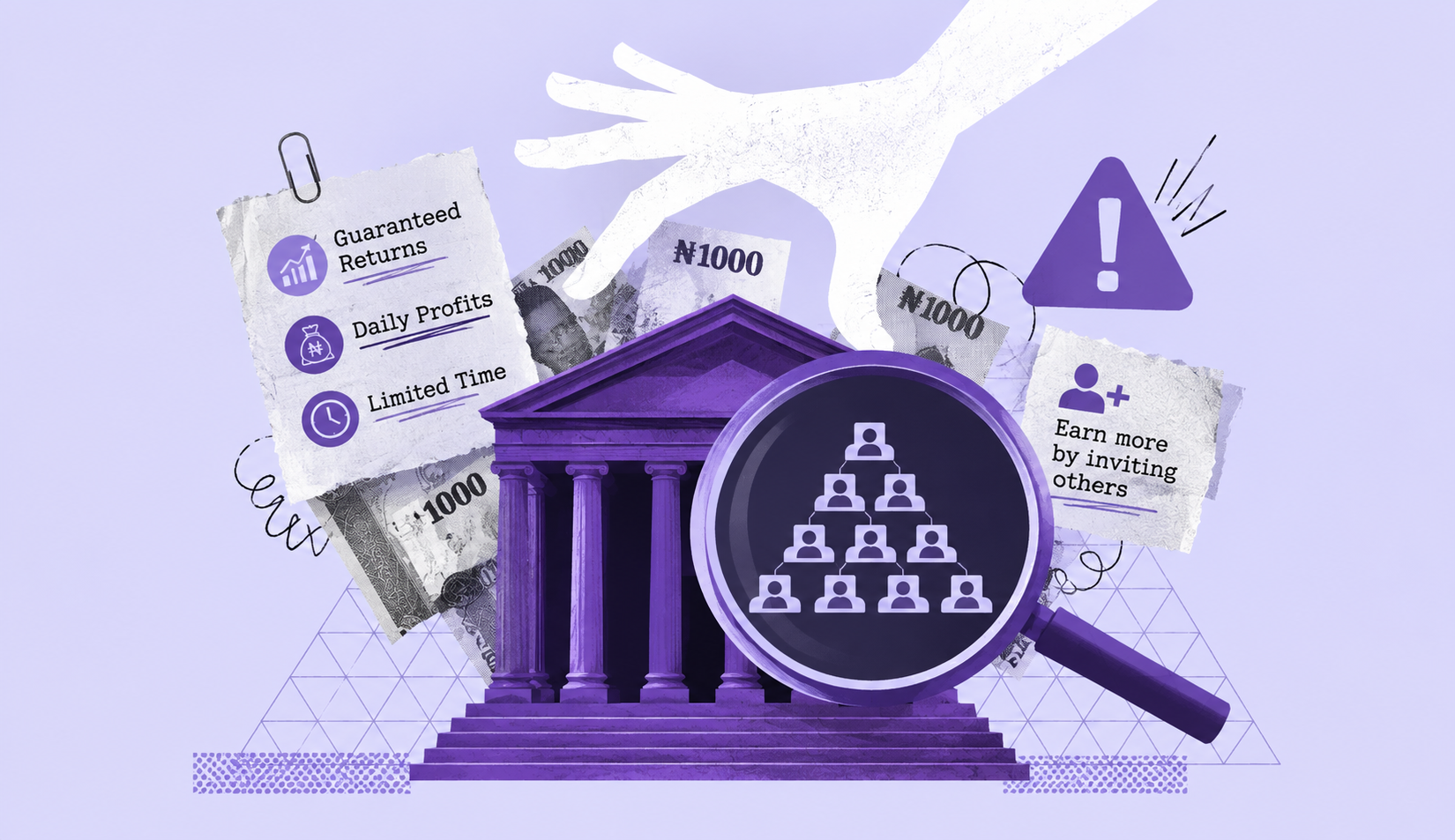
With inflation and rising cost of living, people wants guaranteed returns and ponzi schemes promise them – “30% every month”, "double your capital”, “zero risk investment” and the likes.
People buy this because of the fear of missing out on such opportunity but remember this: Every legitimate investment carries risk.
They rely on trust more than technology
Many Ponzi schemes don't spread through ads. They spread through people – colleagues, church member, family member, trusted friend e.t.c.
This is exactly how many schemes grow. People trust someone they know than a stranger.
Unfortunately, those making the recommendations are often victims too. They genuinely believe the platform is legitimate because they have received early payouts.
Separate relationship from research. Just because someone you know joined doesn't make it safe. Verify before joining.
Why do people keep falling for them?
Many Nigerians are looking for ways to keep up with rising living costs, earn additional income, or build wealth. Ponzi schemes exploit these realities. They appeal to young professionals, students, retirees, small business owners, and anyone experiencing financial pressure or fear of missing out.
Scammers understand human psychology.
They know that hope can sometimes outweigh caution but the damage goes beyond money. When a Ponzi scheme collapses, people lose saving, businesses lose capital, relationships collapse, communities become suspicious of legitimate investment opportunities. Victims are left with debts after borrowing money to participate.
To avoid this, talk openly about red flags if you spot one, to avoid others from falling victims.
How to identify a Ponzi scheme
Although every scheme looks different, many share the same warning signs.
Be cautious if a platform:
Guarantees unusually high returns.
Claims “no risk”.
Pressures you to invest immediately.
Pay you for recruiting other people.
Cannot explain how profits is made
Has no regulation or oversight.
Focuses on recruitment than actual business activities.
If you don't understand how the business makes money, don't invest.
How to protect yourself
Before investing, ask yourself:
Do I understand exactly how returns are generated?
Are the promised profits realistic?
Is the company transparent about its operations?
Am I investing because I've done my research, or because someone I trust recommended it?
Am I feeling pressured to act quickly?
Have I verified the company independently?
If you can't get answers to most, don't invest. Never let urgency replace due diligence.
What should you do if suspect a Ponzi scheme?
If you believe an investment opportunity may be fraudulent:
Stop sending money immediately.
Keep records of your transactions, receipts and conversations.
Report the matter to your bank if you've already made a payment.
Report the receiving account on Scamrader so others can identify and avoid it.
If appropriate, report the scheme to relevant law enforcement or financial regulators.
Reporting protects you and stops the next victim
Conclusion: The bottom line
Ponzi schemes continue to evolve because they understand one simple truth:
People don't invest because they want to be scammed. They invest because they hope for a better future.
Ponzi looks like opportunities, not scams so before investing, Pause. Ask. Verify.
And remember: “The best investment decision you can make is knowing when not to invest.”
Move smart before your money moves