The New Face of Fraud in Nigeria: 6 Fraud Tactics You Need to Know



Fraud in Nigeria is getting harder to recognise. The days when a scam could be identified simply because the message was badly written, the sender was unknown or the offer sounded obviously ridiculous are fading.
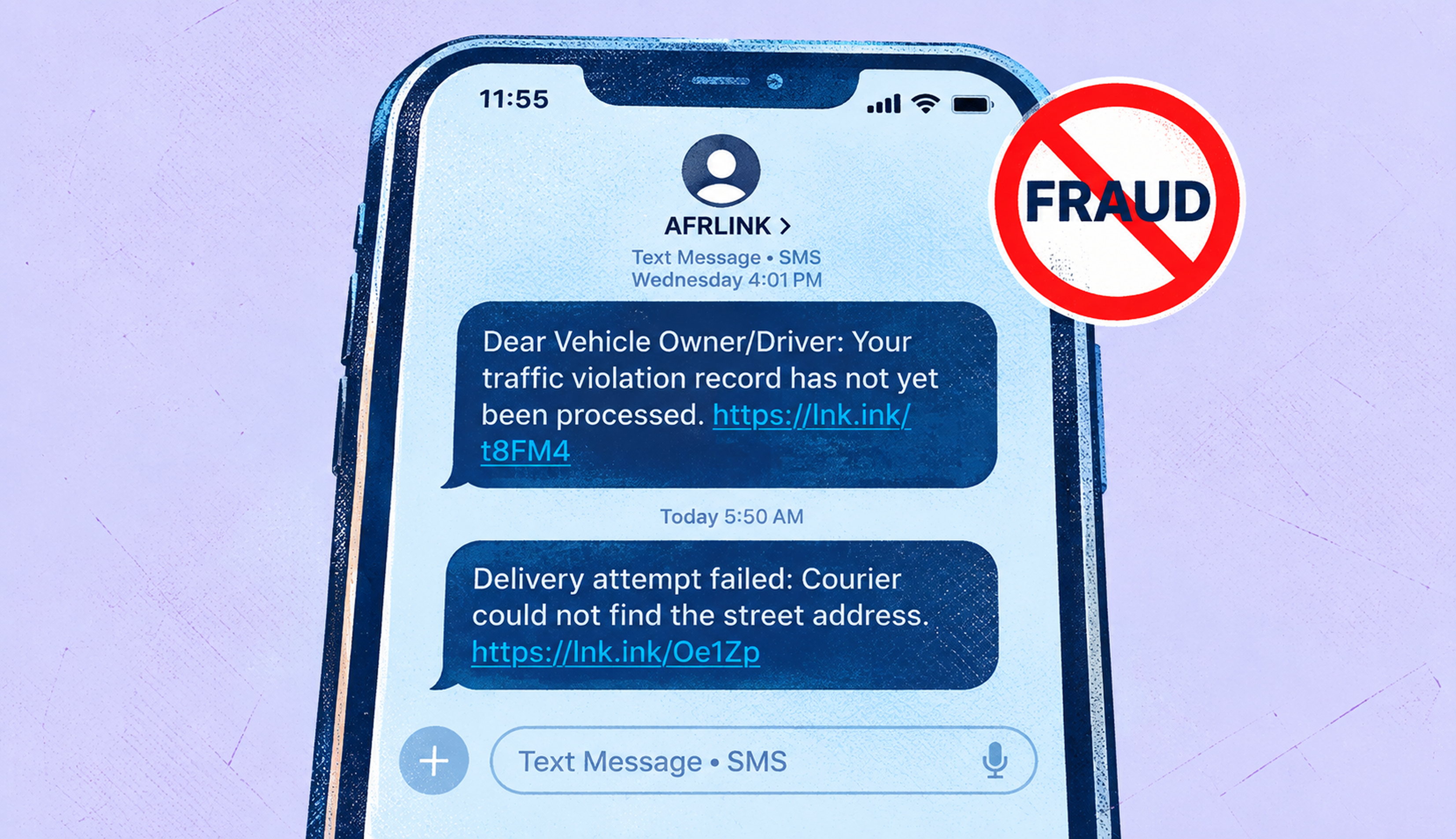
Today, fraudsters are borrowing the names of banks, fintechs, airlines, employers, government agencies and legitimate investment companies to make their schemes look credible.
They are creating fake bank alerts, fake recruitment programmes, fake corporate announcements, fake investment opportunities and even fake police investigations.
Recent cases exposed by Nigerian banks, the EFCC, the Nigeria Police Force and other investigators show just how varied these tactics have become.
Here are some of the emerging and recently exposed fraud patterns Nigerians should know about.
1. Bank & fintech impersonation scams
Category: Financial institution impersonation
Examples: Zenith Bank, FirstBank, OPay, Access Bank
Core tactic: Borrow the credibility of a trusted financial institution to make a fraudulent message, opportunity or transaction appear genuine.
This may be the most important category to watch because fraudsters do not have to convince you that they are trustworthy, they only have to convince you that they are speaking for someone you already trust and they are using different banks and fintechs in different ways.
Zenith Bank Fake Graduate Trainee Recruitment
Scam type: Recruitment fraud
Target: Graduates and job seekers
Estimated age: Not a new technique; Zenith has previously warned about fraudulent recruitment schemes, including a 2019 public disclaimer. Recent 2026 recruitment-related scam content shows the tactic remains active.
Graduate recruitment is an attractive target because thousands of young Nigerians actively search for opportunities at major banks.
Fraudsters exploit this demand by creating recruitment announcements, application links, interview invitations or supposed graduate trainee programmes that appear to come from the bank.
The objective can be to collect: Personal information, CVs and identification documents, login credentials, application fees, “processing” or “training” payments or other sensitive information.
How to spot it: Be suspicious when a supposed bank recruitment exercise: Comes only through WhatsApp or social media, uses an unofficial application website, requires payment to secure a position, promises guaranteed employment, uses a personal email address instead of an official channel, pressures applicants to act immediately or simply cannot be independently verified through the bank's official channels.
Zenith Bank has previously specifically warned the public that it was not in partnership with agencies for recruitment and directed candidates to its official recruitment route.
Remember, A bank's logo on a recruitment flyer does not make the recruitment exercise genuine.
FirstBank: Fake Pop-Up/Transaction Alerts
Scam type: Malicious app / fake banking pop-up / credential theft
Confirmed: September 25, 2026
Status: Active warning from FirstBank
This scam doesn't begin with a WhatsApp message or a suspicious website. It can begin on the victim's own phone.
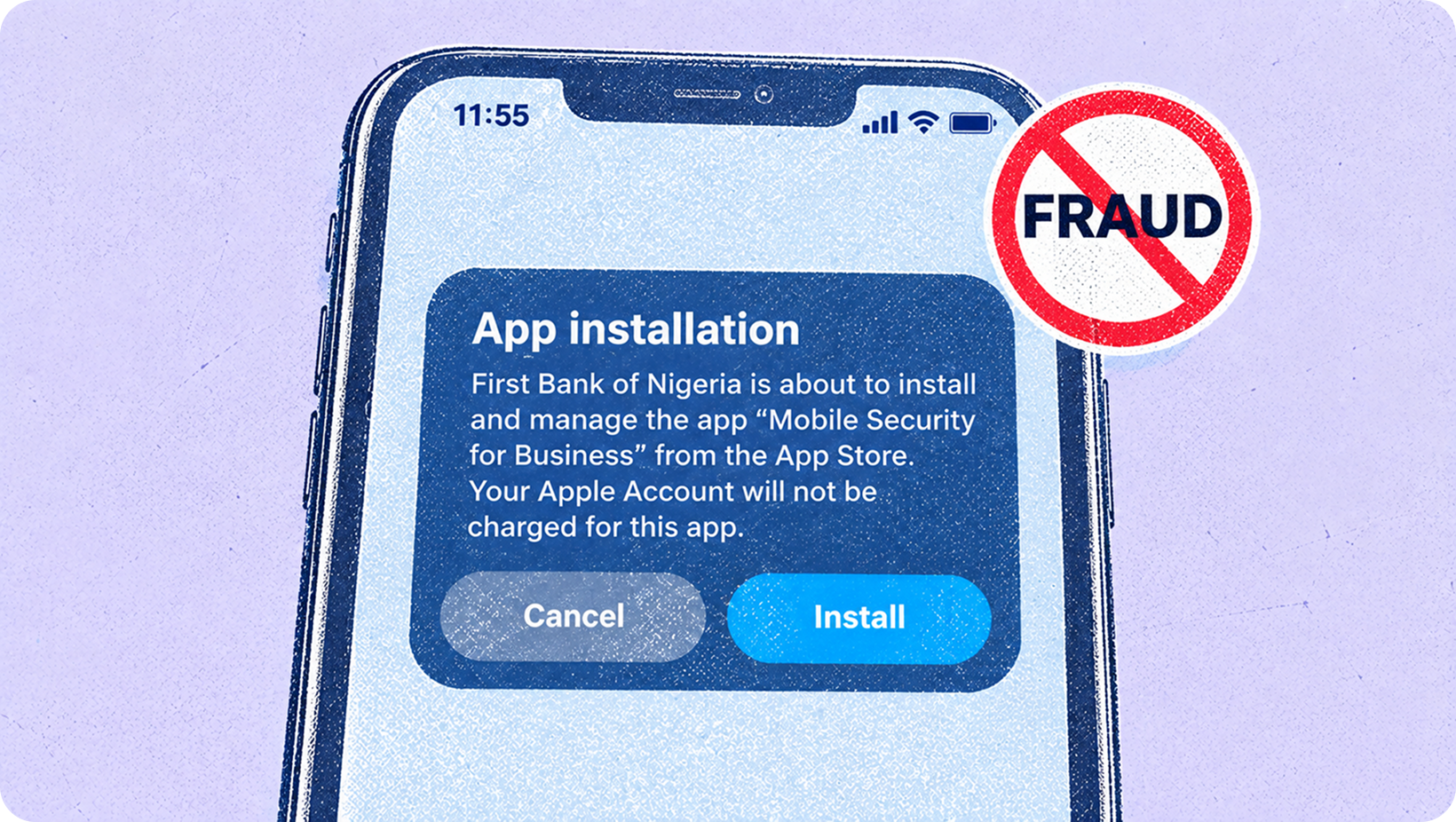
FirstBank recently warned customers about deceptive pop-ups generated by malicious applications. Read more here
The danger: Once the victim follows the instructions, they may hand over their banking credentials or transaction PIN to the fraudster.
How to spot it: If a banking warning suddenly appears as a floating pop-up and asks you to log in, change your password or make a test transaction, do not interact with it. Close it, disconnect the device from the internet and investigate recently installed or unfamiliar applications. Your bank should not need you to make a “small transaction” to prove that your account is safe.
OPay: The Fake Shutdown Notice
Scam type: Corporate impersonation / false financial announcement
First publicly reported: August 31, 2026
Estimated age: Days at the time of law-enforcement intervention
Law-enforcement development: Suspect arrested September 4, 2026
In late August 2026, a document began circulating online claiming that OPay would suspend operations from September 1 and go on an indefinite break.
The message told customers to withdraw their money. It looked like an official corporate announcement but it wasn't as OPay publicly dismissed the notice as false and said the company remained fully operational.
The Nigeria Police Force National Cybercrime Centre arrested a 27-year-old woman, Hafsat Abubakar, on September 4 after OPay petitioned the police over the fabricated document. Police said digital forensics traced the document to an X account allegedly operated by the suspect.
OPay also pointed out inconsistencies in the document, including an outdated logo, a misspelt brand name and a layout that did not match its normal corporate communications.
Why this works: The message does not start by asking for your money. It starts by making you afraid of losing access to your money. That fear can then push people into making rushed decisions and fraudsters can take advantage of the panic.
Access Bank: Another Fake Shutdown Claim
Scam type: Corporate impersonation / false publication
Incident date: July 28, 2026
Public denial: July 30, 2026
Court development: September 2026
Another false shutdown claim targeted Access Bank. The publication claimed that Access Bank would shut down its operations from September 23, 2026, and urged customers to close their accounts and withdraw their funds. Access Bank publicly denied the claim and said the message falsely impersonated its official communication channels.
The matter later resulted in the arraignment of two women. Police alleged that the publication had been circulated through Facebook and WhatsApp. The defendants pleaded not guilty, so the allegations remain allegations pending trial.
The lesson here is that the next fake announcement may not say: “Your bank is shutting down.” It could say: "Your account will be frozen.", "Your bank licence has been revoked.", "You must migrate your account.", "Your BVN has expired.", "Your money must be withdrawn." or "Your account needs urgent verification."
The objective is the same; to create urgency before you have time to verify.
2. Investment fraud that operates like a financial network
Category: Investment fraud / Ponzi-style schemes / account-mule infrastructure
Confirmed case: Fred and Farid Investment (FF Investment)
Publicly disclosed: January 2026
Reported victims: More than 200,000
Reported proceeds: Approximately ₦18.7 billion
Investment fraud is not new. What is changing is the scale and infrastructure behind some of these schemes.
The EFCC disclosed an investigation into Fred and Farid Investment Limited (FF Investment) and related companies that allegedly operated bogus investment arrangements.
According to the EFCC, more than 200,000 Nigerians were affected and approximately ₦18.7 billion moved through the scheme but the most revealing part of the investigation was not simply the fake investment offer. It was the financial infrastructure surrounding it.
The EFCC said one individual maintained 960 accounts in a single bank, with investigators finding that the accounts were allegedly used for fraudulent purposes. The investigation also found that more than ₦18 billion passed through the financial system without adequate due diligence.
How it works: At the victim level, it can look simple: Investment opportunity → promised returns → victim deposits money → returns encourage further deposits → money disappears but behind the scenes, multiple accounts, companies and financial channels can be used to move the proceeds. Read here to learn more about the red flags.
3. The fake airline discount that can empty your account
Category: Travel fraud / payment-page phishing / financial account compromise
Publicly disclosed: January 2026
Reported victims: 700+
Reported losses: ₦651,097,755
This is one of the more sophisticated cases recently disclosed by the EFCC. The fraudsters advertised heavily discounted international airline tickets. The attraction was obvious: A cheaper flight.
Victims were directed through a payment process designed to make it appear that they were paying the airline.
But according to the EFCC, after payment was completed, the victims' bank accounts were subsequently emptied. More than 700 victims reportedly lost approximately ₦651 million. The investigation also found that proceeds were converted into cryptocurrency, with investigators tracing movement through crypto channels including Bybit.
How to protect yourself: Before buying a heavily discounted flight:
Go directly to the airline's official website.
Check whether the offer exists there.
Verify the travel agent independently.
Do not rely on a social-media advertisement alone.
Examine the payment domain carefully.
Never assume that an airline logo means the payment page belongs to the airline.
4. Government-Official Impersonation
Category: Authority impersonation / extortion
Publicly disclosed: August 26, 2026
Reported victim loss: ₦17 million
What if the person threatening you is not pretending to be your bank?
What if they are pretending to be the police? The NPF-NCCC recently announced the arrest of Babatunde Olamilekan Idowu, also known as “CSP Bamiseye,” over allegations involving impersonation of senior police officers.
According to police, a victim who wanted to lodge a petition was contacted by the suspect, who allegedly presented himself as a Commissioner of Police attached to the Force Intelligence Department in Abuja.
Other members of the alleged syndicate reportedly posed as the Inspector-General of Police and the Attorney-General of the Federation. The victim was allegedly defrauded of ₦17 million.
The psychology: This scam weaponises fear. The victims are simply being told: “You are in trouble.” Once the victim believes they are facing arrest, investigation or prosecution, they may be more willing to pay quickly rather than stop and verify.
Red flags: Be suspicious if someone claiming to be a police officer or government official: Demands money to “settle” a case, threatens immediate arrest unless payment is made, uses WhatsApp as the primary official communication channel, provides an account belonging to a private individual, refuses independent verification, tells you not to contact anyone else or uses photographs, IDs or documents as their only proof.
5. Fake customer-service & support accounts
Category: Brand impersonation / phishing
Targets: Bank and fintech customers
Status: Active, recurring tactic
This is where many of the scams above can become even more dangerous. A fraudster may first create a fake announcement. Then, when confused customers start asking questions online, fake “customer-care” accounts appear in the replies.
For example:
Victim: “Is this notice real?”
Fake account: “Hello dear customer, kindly send us a DM.”
The account may have the bank's logo, similar username and professional-looking profile then the conversation then moves privately. The fraudster may request for information that shouldn't be shared, The initial fake announcement is therefore not always the final scam. Sometimes it is simply the bait that creates the opportunity for impersonators to enter the conversation.
6. Account-buying and mule-account fraud
Category: Identity fraud / money laundering / account mule networks
Recent major case disclosed: January 2026
Scale: One investigated individual reportedly maintained 960 accounts.
A bank account may be valuable to a fraudster even if there is no money in it.
What they want is access to a financial identity. Fraudsters may offer people money to: Open accounts for them, hand over control of existing accounts, register fintech wallets, receive and transfer money, provide personal documents or even allow their identity to be used for account registration.
The EFCC's FF Investment investigation illustrates how large these networks can become. Investigators reported finding a single customer with 960 accounts allegedly used for fraudulent activities.
Never rent out your financial identity. Your name, BVN, account and identity documents should not be treated like commodities.
Fraud doesn't always look like fraud
A fake bank announcement. A fake job offer. A fake investment. A fake airline payment page. A fake police officer may look completely different, but they all exploit the same thing: trust.
Fraudsters borrow the identity of institutions and people we already recognise to make us act before we verify. So don't judge a message by how official it looks, make sure to verify the source because a logo can be copied, a document can be forged, a profile can be fake and even a familiar name can be impersonated so when something feels urgent, don't panic, go directly to the organisation's official channel and verify it yourself.
Move smart before your money moves